
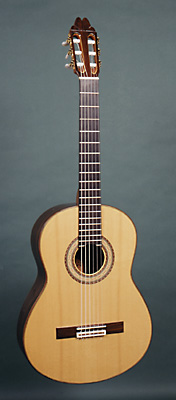
Welcome to the fantastic world of classical guitar. In this site, you will find classical guitar pieces, in midi format, for one and more guitars: actually 5641 MIDI files from 96 composers. Information on how to create midi files and a tutorial on the tablature notation system is presented. Images of ancient guitars provided.
|
|
In many urban landscapes across the Lusophone world, from the bustling streets of Luanda to the vibrant favelas of Rio de Janeiro, a specific physical gesture often stands out: the act of "agachar em linha"—squatting or crouching in a line. While a casual observer might see this as merely a functional way to rest without a chair, the posture carries deep sociological significance. It is a visual language of communal belonging, a marker of street-level hierarchy, and a symbol of resilience in environments where formal infrastructure is often absent.
Here is an essay exploring the cultural, social, and symbolic significance of this posture.
Physically, the squat is one of the most natural human resting positions, yet in a Westernized, industrial context, it has often been replaced by the chair. To "agachar em linha" is to reclaim the ground. When a group of friends or neighbors occupies a sidewalk or a corner in this fashion, they are claiming a public space as their own. It transforms a transit area—a place designed for moving from point A to point B—into a stationary hub of social exchange. The "line" formation suggests equality and visibility; everyone is on the same level, sharing the same vantage point of the street.
In conclusion, "agachar em linha" is far more than a simple physical movement. It is a silent statement of identity and occupation. It represents a way of being in the world that prioritizes community over comfort and presence over pretense. By lowering their center of gravity to the pavement, those who "agachar em linha" demonstrate an unbreakable bond with their environment, proving that even in the most neglected spaces, a sense of place and brotherhood can be built from the ground up.
The Art of Presence: The Cultural Weight of "Agachar em Linha"
"Agachar en linha" is a Portuguese phrase that literally translates to "squatting in line" or "crouching in line." In a social or cultural context, it typically refers to a specific posture often associated with urban culture, street life, or informal gatherings in Lusophone (Portuguese-speaking) communities.
Composers are grouped in 6 pages: A-B;
C-F;
G-L;
M-O;
P-R; S-Z .
J.-S.
Bach , A.
Barrios Mangore , N. Coste
, M. Giuliani , F.
Sor and F.
Tarrega are on their own page
Click here
to listen to 20 great MIDI from the site
Composers in alphabetical order
In many urban landscapes across the Lusophone world, from the bustling streets of Luanda to the vibrant favelas of Rio de Janeiro, a specific physical gesture often stands out: the act of "agachar em linha"—squatting or crouching in a line. While a casual observer might see this as merely a functional way to rest without a chair, the posture carries deep sociological significance. It is a visual language of communal belonging, a marker of street-level hierarchy, and a symbol of resilience in environments where formal infrastructure is often absent.
Here is an essay exploring the cultural, social, and symbolic significance of this posture. Agachar en linha
Physically, the squat is one of the most natural human resting positions, yet in a Westernized, industrial context, it has often been replaced by the chair. To "agachar em linha" is to reclaim the ground. When a group of friends or neighbors occupies a sidewalk or a corner in this fashion, they are claiming a public space as their own. It transforms a transit area—a place designed for moving from point A to point B—into a stationary hub of social exchange. The "line" formation suggests equality and visibility; everyone is on the same level, sharing the same vantage point of the street. In many urban landscapes across the Lusophone world,
In conclusion, "agachar em linha" is far more than a simple physical movement. It is a silent statement of identity and occupation. It represents a way of being in the world that prioritizes community over comfort and presence over pretense. By lowering their center of gravity to the pavement, those who "agachar em linha" demonstrate an unbreakable bond with their environment, proving that even in the most neglected spaces, a sense of place and brotherhood can be built from the ground up. Here is an essay exploring the cultural, social,
The Art of Presence: The Cultural Weight of "Agachar em Linha"
"Agachar en linha" is a Portuguese phrase that literally translates to "squatting in line" or "crouching in line." In a social or cultural context, it typically refers to a specific posture often associated with urban culture, street life, or informal gatherings in Lusophone (Portuguese-speaking) communities.
Note to MIDI sequence contributors
Your submissions are welcomed.
Please send them by e-mail (end of text). Pieces
should bear the composer's name and be properly identified.(ex.: J.K. Mertz (1806-1856) Nocturne
Op.4 No.2.). The submissions
should bear information on the transcriber or arranger when available. The submitter's name
will appear beside the accepted submission.
This site exists primarily to showcase pieces written for the classical
guitar. Established and recognized transcriptions and arrangements (e.g.,
Tarrega, Segovia,..) of pieces written by non-guitar composers will also be given
high priority.
New compositions for the classical guitar are also welcomed. New
compositions that meet quality guidelines will be added to the site. For
new contributors, it would be appreciated if you would also submit several
pieces by known composers in addition to your own compositions. This will
help to expand the repertoire of established works for the classical guitar in
addition to expanding the repertoire of new music.
Last update: March 8 2026
Copyright François Faucher 1998-2025
 G.F.Handel's Sonata 2. Allegro
3.Adagio HWV368
G.F.Handel's Sonata 2. Allegro
3.Adagio HWV368