Thank you

A Product Trainer will contact you within two business days to schedule a one-on-one training session.
: Finding the unique string used to prevent multiple instances.
This specific file, found in , focuses on analyzing malicious Windows programs that utilize service persistence and mutexes to ensure only one instance of the malware runs at a time. Key Characteristics of the Malware in Chapter 7
: It may attempt to modify system files or registry keys, such as HKLM\Software\Microsoft\Windows\CurrentVersion\Run , to ensure its continued execution. Analysis Goals
Analysts investigating this file typically look for the following indicators and behaviors:
: Determining what name the malware uses to hide in the Services list.
The file Goingrogue-Chapter7-pc.zip is a common malware sample used for educational purposes in the cybersecurity community, specifically within labs for the book (PMA).
: Identifying the IP address or domain the malware tries to contact. Malware Analysis Report - CISA
: After successful installation, the malware usually attempts to "beacon" or communicate with a Command and Control (C2) server, often via a hardcoded URL.
A Product Trainer will contact you within two business days to schedule a one-on-one training session.
We’ve received your request for technical support. A Technical Support Specialist will contact you within 1 business day.
Your Target Market Request form has been sent. Your SocialCRM support agent will contact you to discuss any specifics, if needed.
Thank you for your interest in Mitchell 1 products. A Customer Service Agent will contact you within 1 business day.
Please allow 30 business days for your request to be processed.
We’ve received your request for assistance with your Mitchell 1 account. A Customer Service Agent will contact you within 1 business day.
We’ve received your request for a call back. A Customer Service Agent will contact you within 1 business day.
Thank you for contacting Mitchell 1 to discuss data integration opportunities. Clients who meet the requirements will be contacted to discuss a potential opportunity.
Your upgrade request for Accounting Link has been received. A Customer Service agent will contact you shortly.
Your details have been successfully submitted!
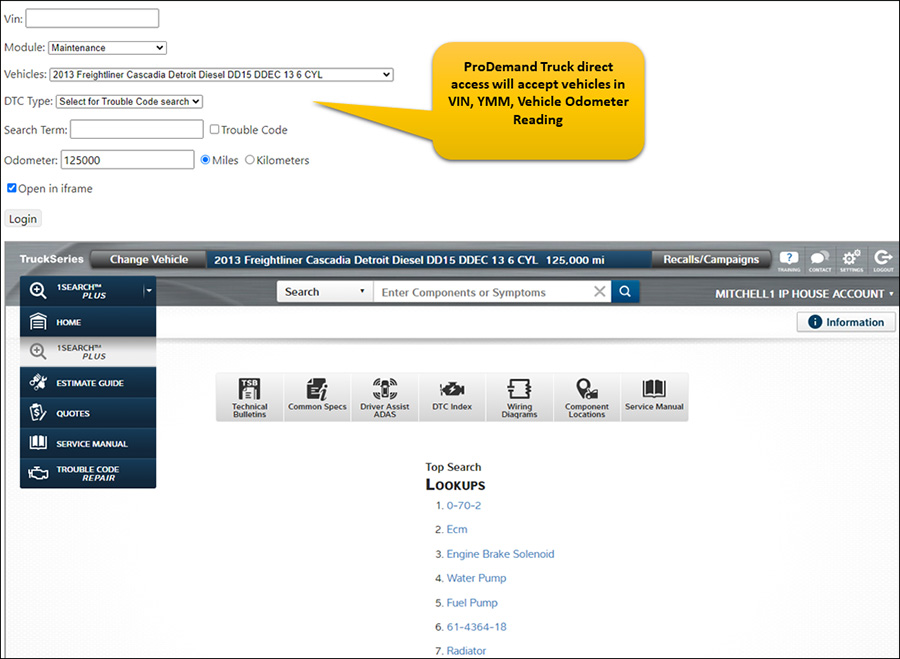
Direct Access—Pass-Through (transfer ticket) streamlines access straight into ProDemand Truck. Depending on the configuration, this workflow uses the user/password credentials or an account number. Your users can launch into ProDemand Truck, assuming they already have an active subscription.
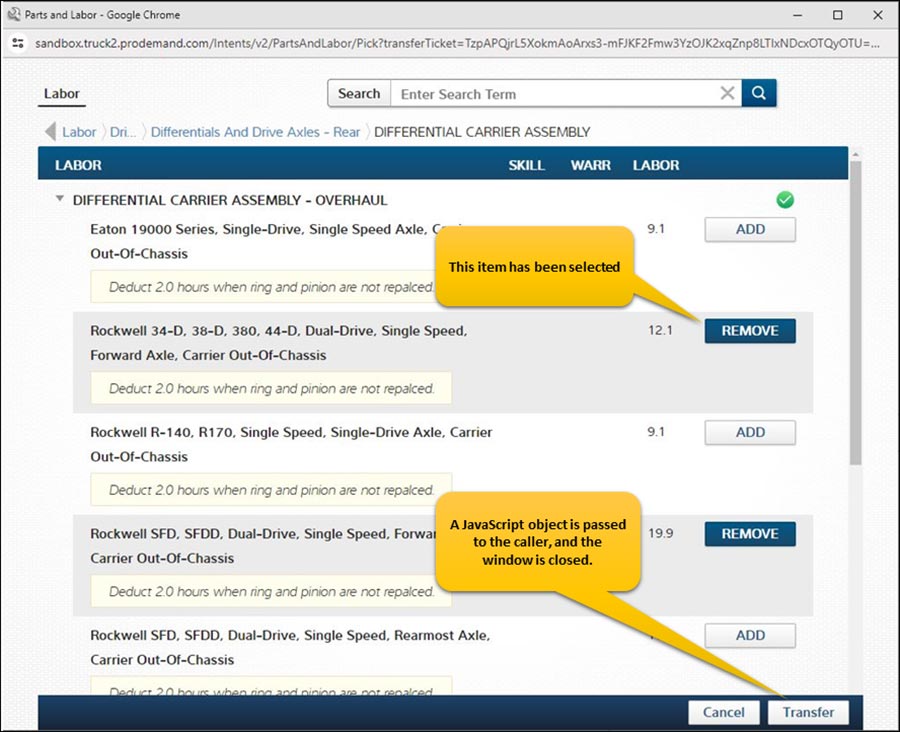
ProDemand Medium and Heavy-Duty Truck Class 4-8 has the following mechanisms for application-level integration with our repair content: (Labor)
Your users can launch the ProDemand Medium & Heavy-Duty Truck UI sub-sections, assuming they already have an active subscription. File: Goingrogue-Chapter7-pc.zip ...
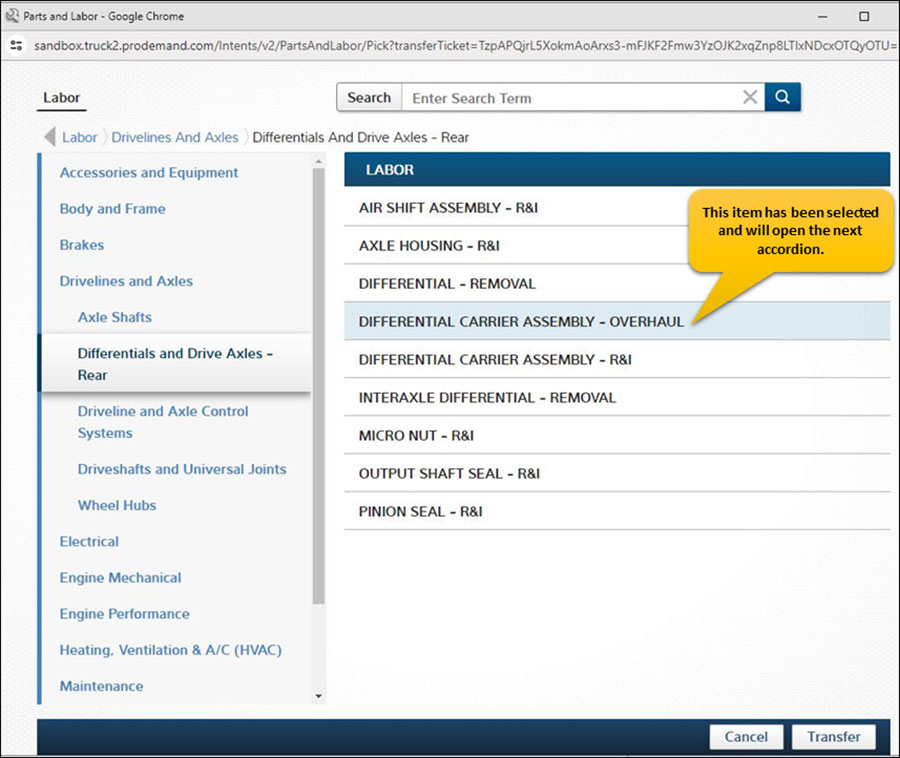
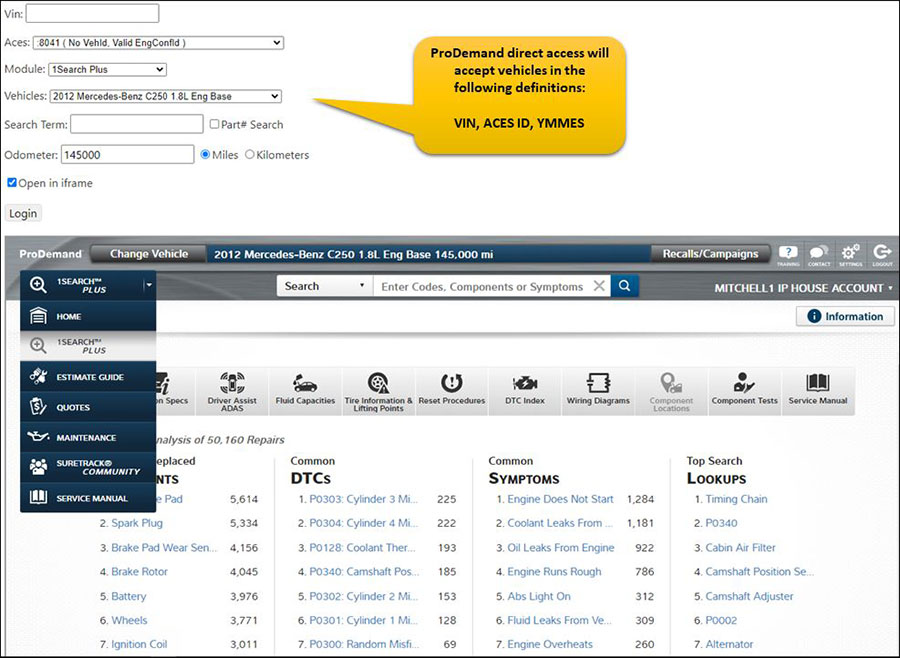
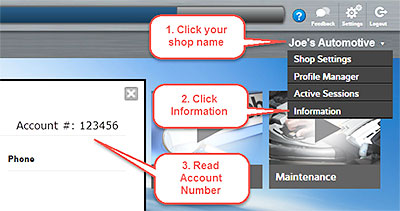
Direct Access—Pass-Through (transfer ticket) streamlines access straight into ProDemand. Depending on the configuration, this workflow uses the user/password credentials or an account number. Your users can launch into ProDemand, assuming they already have an active subscription.